
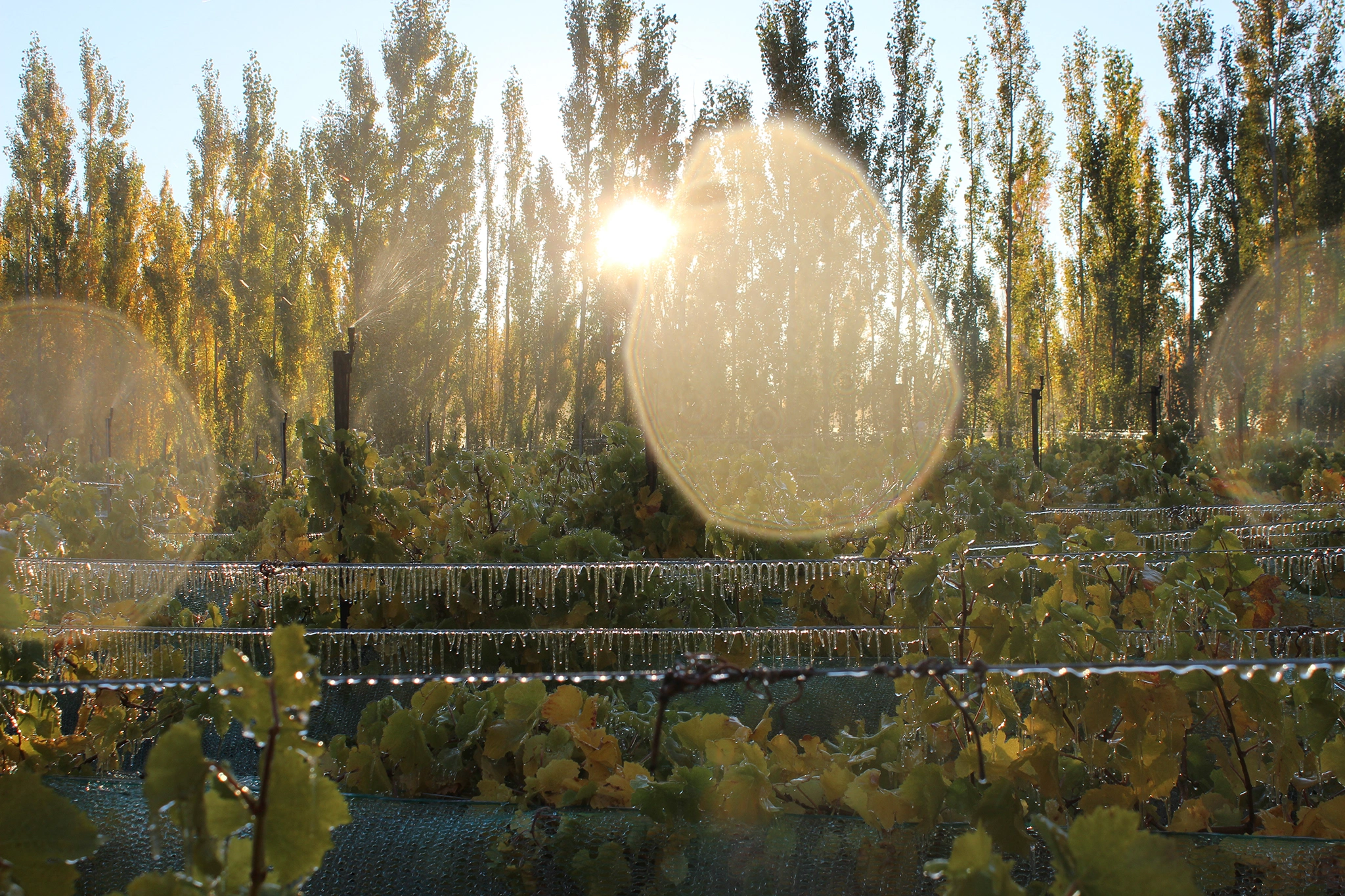
Our Terroir — At the Edge of Viticulture
Chile Chico, Patagonia — 46° South
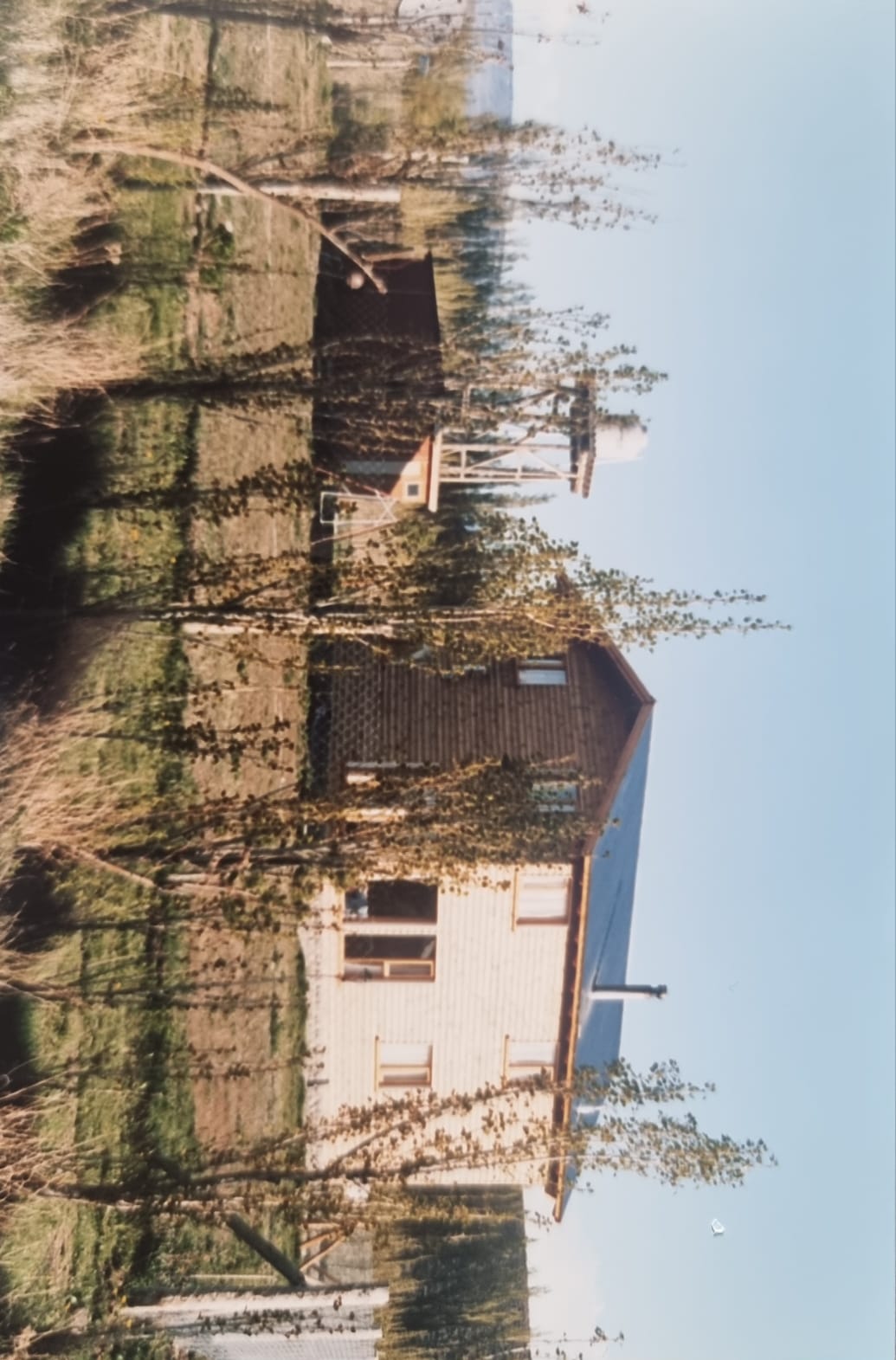
Allá Lejos is located in Chile Chico, in the Aysén Region of Chilean Patagonia, around 2,000 kilometers south of Santiago and over 800 kilometers from the gateway cities of Northern Patagonia.
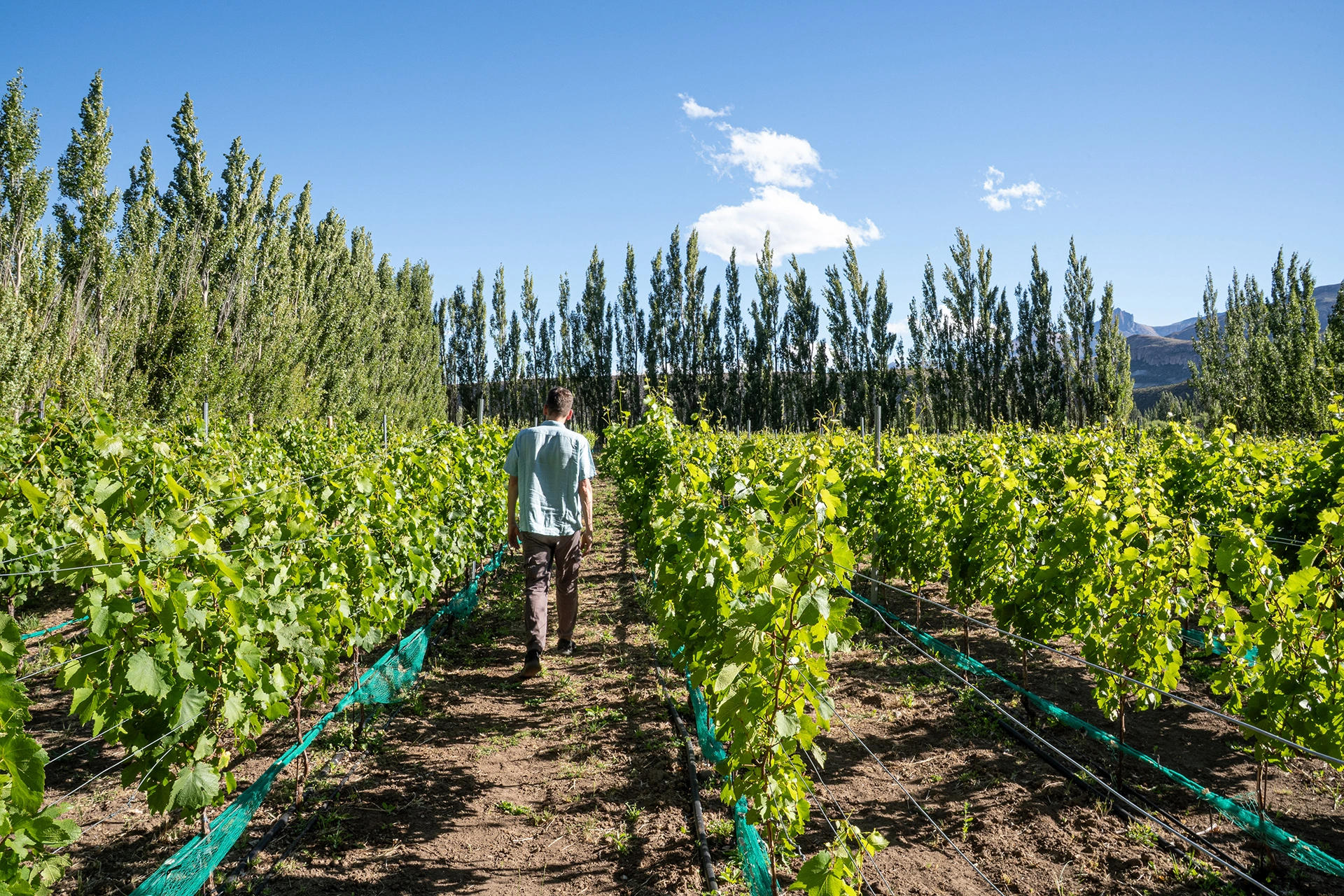
The vineyard lies in a trans-Andean valley near the southern shore of Lake General Carrera (Chelenko), one of the largest and deepest lakes in South America. Here, glaciers, mountains, lake influence, and open steppe converge to create a landscape unlike any other wine region in the world.
At 46° South (46°55′ S, 71°69′ W), viticulture reaches one of its southernmost expressions on Earth. The site has now produced multiple consecutive vintages, confirming repeatable balance.
This is not a marginal detail.
It defines everything.
A Place That Sets the Rules
The environment of Chile Chico is best described as a semi-arid cold steppe. Rainfall is low, temperatures remain moderate during the growing season, and wind is a constant presence.
- •Intense sunlight during long summer days
- •Cold climate that preserves acidity and aromas
- •Persistent Patagonian winds that reduce disease pressure
- •A short and intense growing season
At this latitude, vines do not follow conventional calendars. Ripening is slow and uneven by design. Balance must be earned.
This is a place where viticulture cannot be forced — only understood.

From Question to Proof
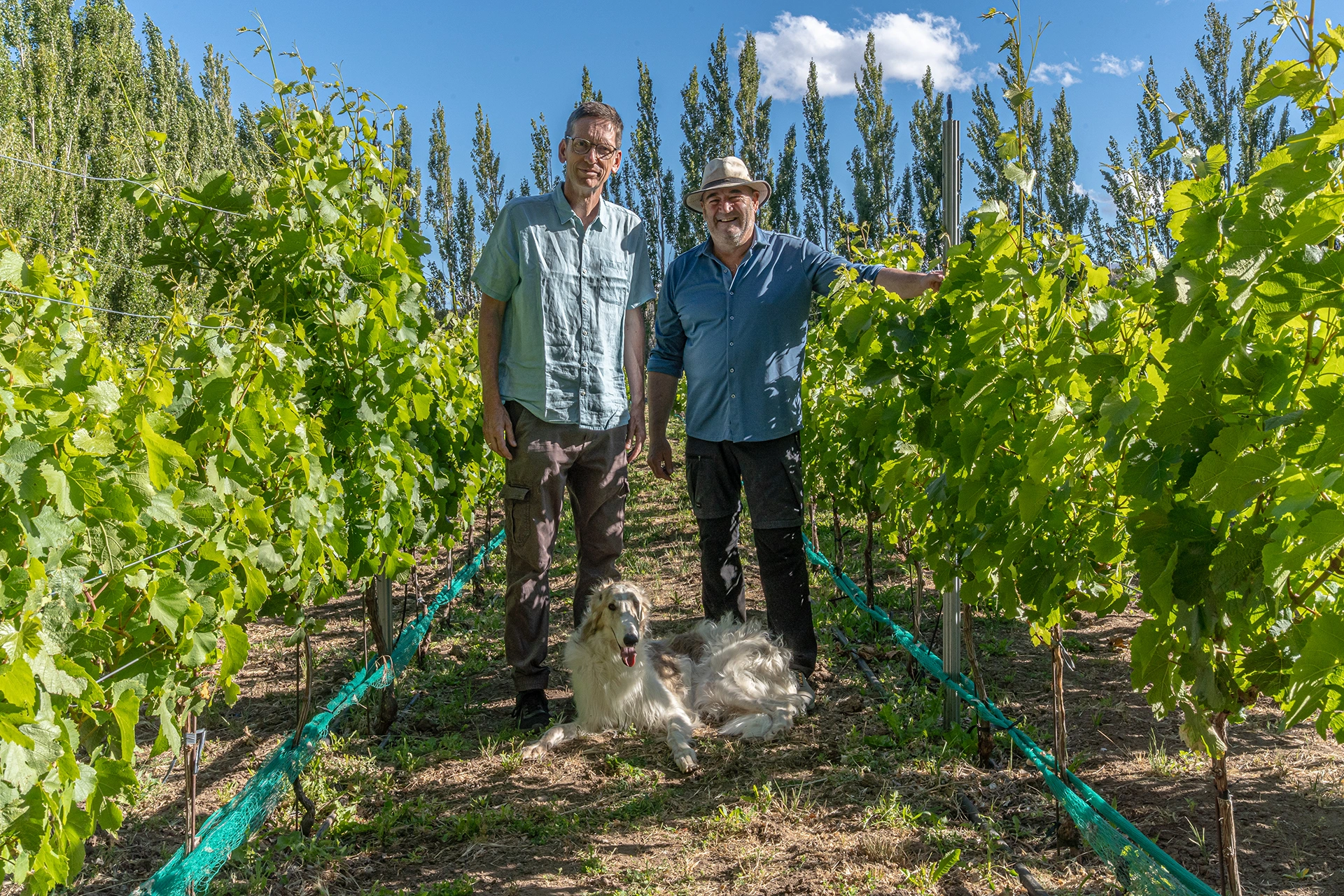
Allá Lejos began with a clear question:
could fine wine be produced here, consistently, at this latitude?
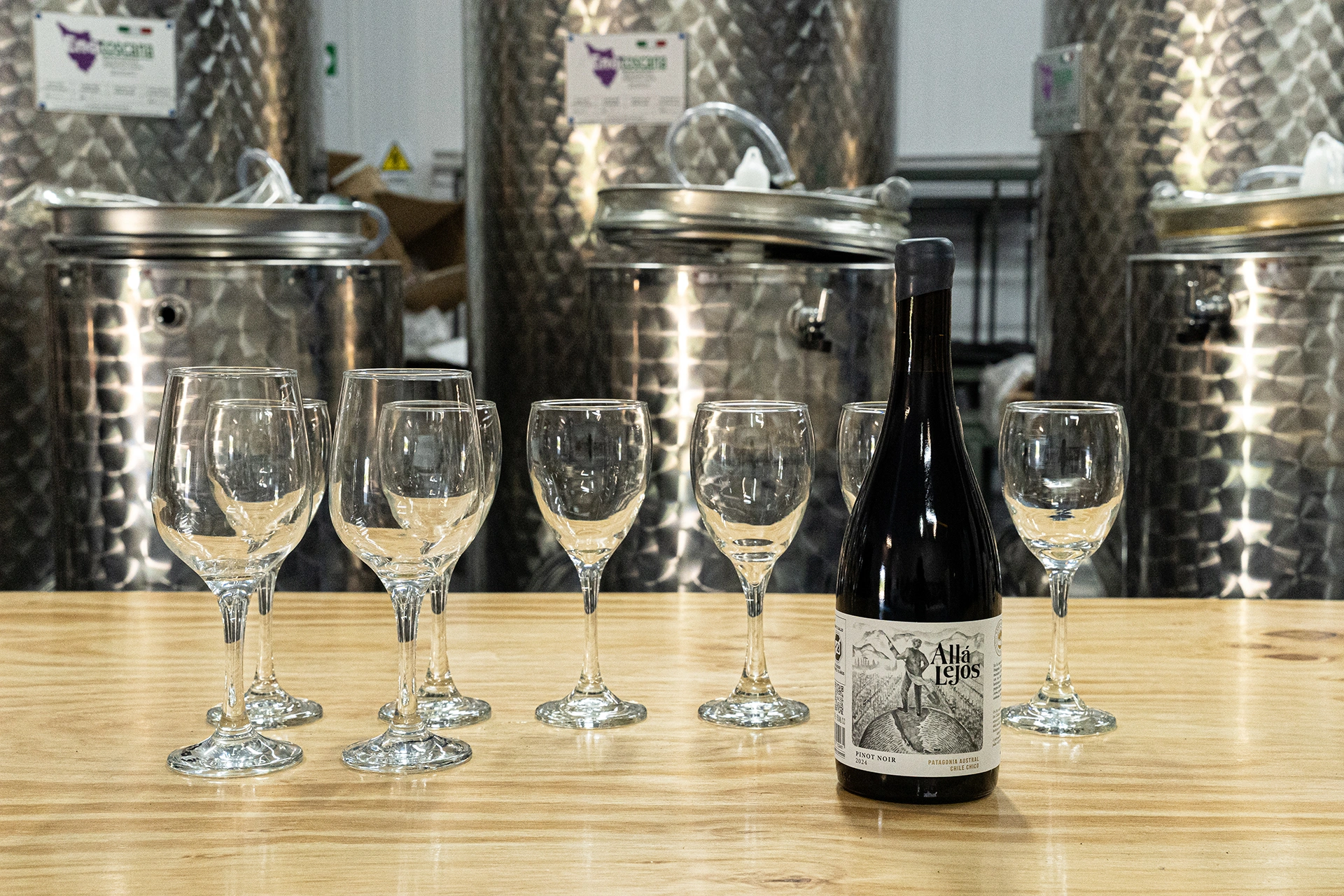
Pinot Noir and Chardonnay were selected for their ability to respond to cold climates and short ripening cycles. Over successive vintages, the vineyard has demonstrated that these varieties not only survive in Southern Patagonia, but express a distinctive profile shaped by place: freshness, mineral tension, and precision.
What started as an exploration has become a working estate.
The results are repeatable. The learning is cumulative.
Each vintage adds confidence — and opens new possibilities.
Soils, Water, and Structure
The vineyard is planted on sandy loam soils of alluvial origin, formed by the former bed of the Jeinimeni River, with strong glacial influence and volcanic ashes. These soils drain freely, naturally limiting vigor and contributing to clarity and definition in the wines.
Irrigation is supplied through drip systems fed by the Jeinimeni River, allowing precise water management in an otherwise dry environment.
The combination of soil, light, wind, and temperature creates natural limits on yield — not as a constraint, but as a source of focus and identity.
Cultivation at the Southern Frontier
Work at Allá Lejos begins in the vineyard.
Low-intervention cultivation prioritizes canopy management to protect grape clusters during periods of strongest sunlight, while maintaining airflow and freshness. Wind pressure reduces disease risk, allowing sustainable practices with minimal correction.
Each season presents its own challenge. Early frosts, short summers, and long winters demand precision in timing and decision-making. Harvest is guided by balance and tension rather than ripeness alone.
Every successful vintage is a confirmation:
this place works — on its own terms.
From Landscape to Wine
The wines of Allá Lejos reflect their origin with clarity.
Freshness comes from Patagonia's cold climate.
Energy from intense light.
Structure from wind and seasonal stress.
These are not wines of power or excess. They are wines of tension, definition, and longevity, shaped by a landscape where viticulture operates at its outer edge.
A Proven Frontier, Entering Its Next Phase
Operating at one of the southernmost limits of viticulture in the world brings responsibility — but it also brings opportunity.
With multiple vintages behind it, the vineyard has moved beyond experimentation into a phase of deliberate growth. Each new planting builds on what the land has already proven capable of, allowing Allá Lejos to expand with confidence while preserving the precision and character that define this place.
This is not about increasing volume for its own sake.
It is about taking Patagonian viticulture further — thoughtfully, strategically, and with partners who understand the value of origin.
Technical Snapshot
Site
- Location
- Chile Chico, Aysén Region, Chilean Patagonia
- Coordinates
- 46°55′ S, 71°69′ W
- Setting
- Trans-Andean valley, lake shore and open steppe
- Lake influence
- General Carrera (Chelenko)
- Distance to Santiago
- 2,007 km by road / 1,967 km on foot
- Altitude
- 220 masl
Vineyard
- Planted to date
- 0.5 ha (validation block)
- Land secured
- Approx. 12 ha
- Varieties
- Pinot Noir, Chardonnay
- Planting density
- High density planting
- Training system
- Guyot
- Soils
- Sandy loam, alluvial origin with glacial influence and volcanic sand
- Water
- Drip irrigation supplied by the Jeinimeni River
- Approach
- Low-intervention farming and winemaking
Style Drivers
- •Cold nights & long daylight → preserved acidity and aromatic clarity
- •Wind & low humidity → naturally low disease pressure
- •Free-draining soils → moderated vigor and definition
Light, Air, and Time
Chile Chico sits in a cold steppe climate with low rainfall and constant air movement. Long summer days allow gradual flavor development, while cool nights preserve freshness and structure. Ripening progresses slowly and evenly, encouraging balance rather than excess accumulation.
This environment favors precision over weight.
Varieties
Pinot Noir and Chardonnay were selected for their ability to complete ripening under moderate temperatures and extended daylight. Across successive vintages, both varieties have shown a consistent expression shaped by place: clarity of fruit, natural acidity, and fine structure.
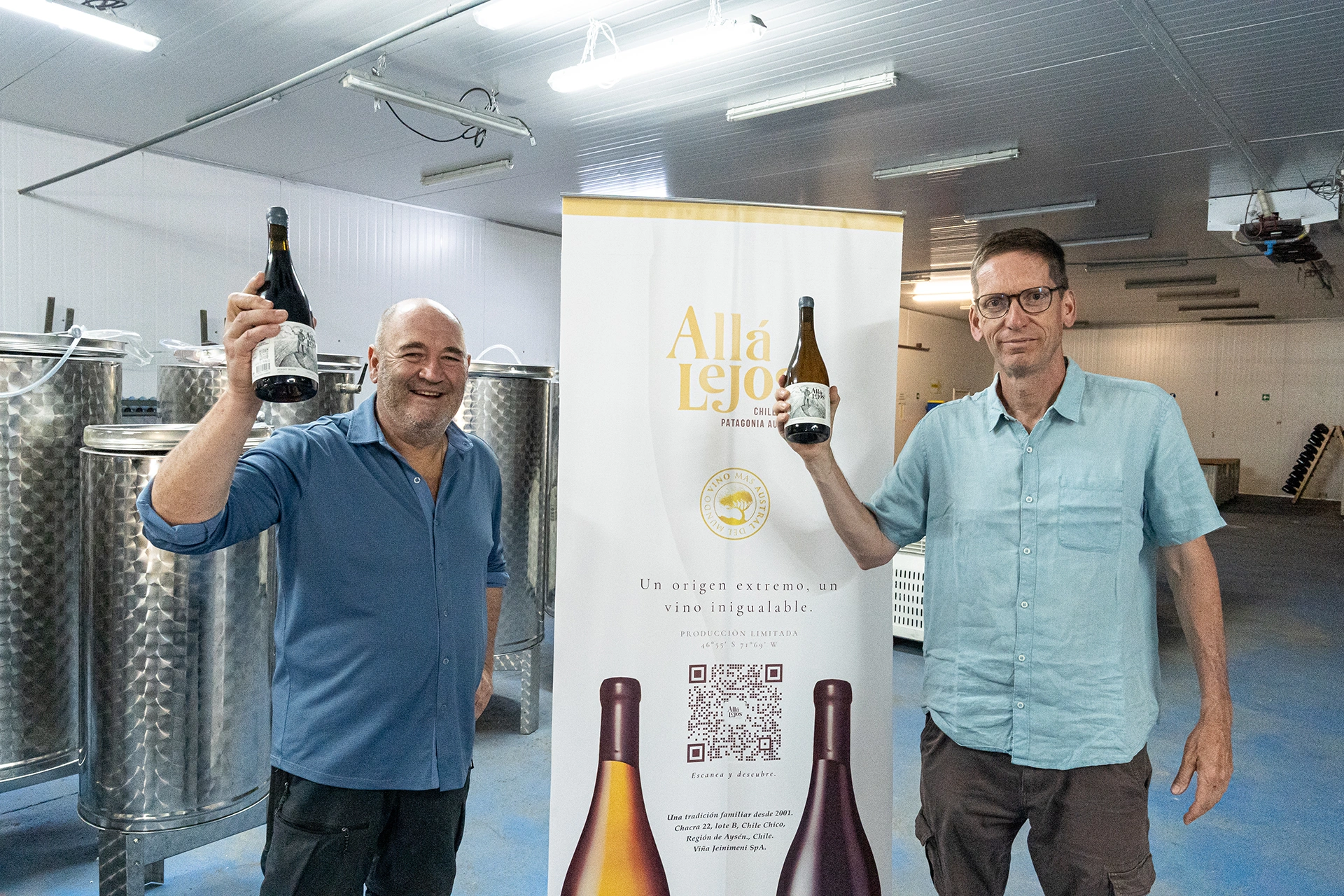
The Descorchados guide (South America) has recognized Allá Lejos in consecutive vintages: 2023 (Chardonnay 93, Pinot Noir 94) and 2024 (Chardonnay 95, Pinot Noir 93), with the Chardonnay featured in category rankings including Best Chardonnays and Best of Southern Chile.
From Validation to Continuity
The first planted block at Allá Lejos was established intentionally as a validation parcel. Instead of developing the entire property immediately, the vineyard was observed across multiple seasons to confirm repeatability and to define a low-intervention approach grounded in what the site consistently delivers.
The wines have since received international recognition and have been presented in professional contexts including Descorchados New York and ProWein Sao Paolo. The initial objective has therefore been met: the site produces quality reliably, with a coherent and repeatable style.
With this understanding in place, the next stage begins in 2026: gradual planting across approximately 7 hectares, guided by what the site has already proven.
Soils and Water
The vineyard is planted on sandy loam soils of alluvial origin formed by the former bed of the Jeinimeni River and marked by glacial influence. These soils drain freely and help maintain naturally moderated vigor.
Water is supplied through drip irrigation from the Jeinimeni River, allowing precise and minimal intervention, always in service of balance rather than volume.
Farming Philosophy
Work begins in the vineyard. Canopy management protects fruit during peak light while maintaining airflow and freshness. Harvest decisions prioritize balance: acidity, aromatic development, and texture, rather than ripeness alone.
In the cellar, the same principle applies: careful handling and only the adjustments necessary to preserve quality and transparency of origin. Our philosophy is: minimal intervention to preserve the integrity of the origin.
The result is not abundance, but definition.
From Landscape to Wine
Freshness comes from cool nights.
Aromatic clarity from long daylight.
Structure from wind, drainage, and moderated yields.
These are wines shaped by patience and precision, where origin determines style long before the cellar.